
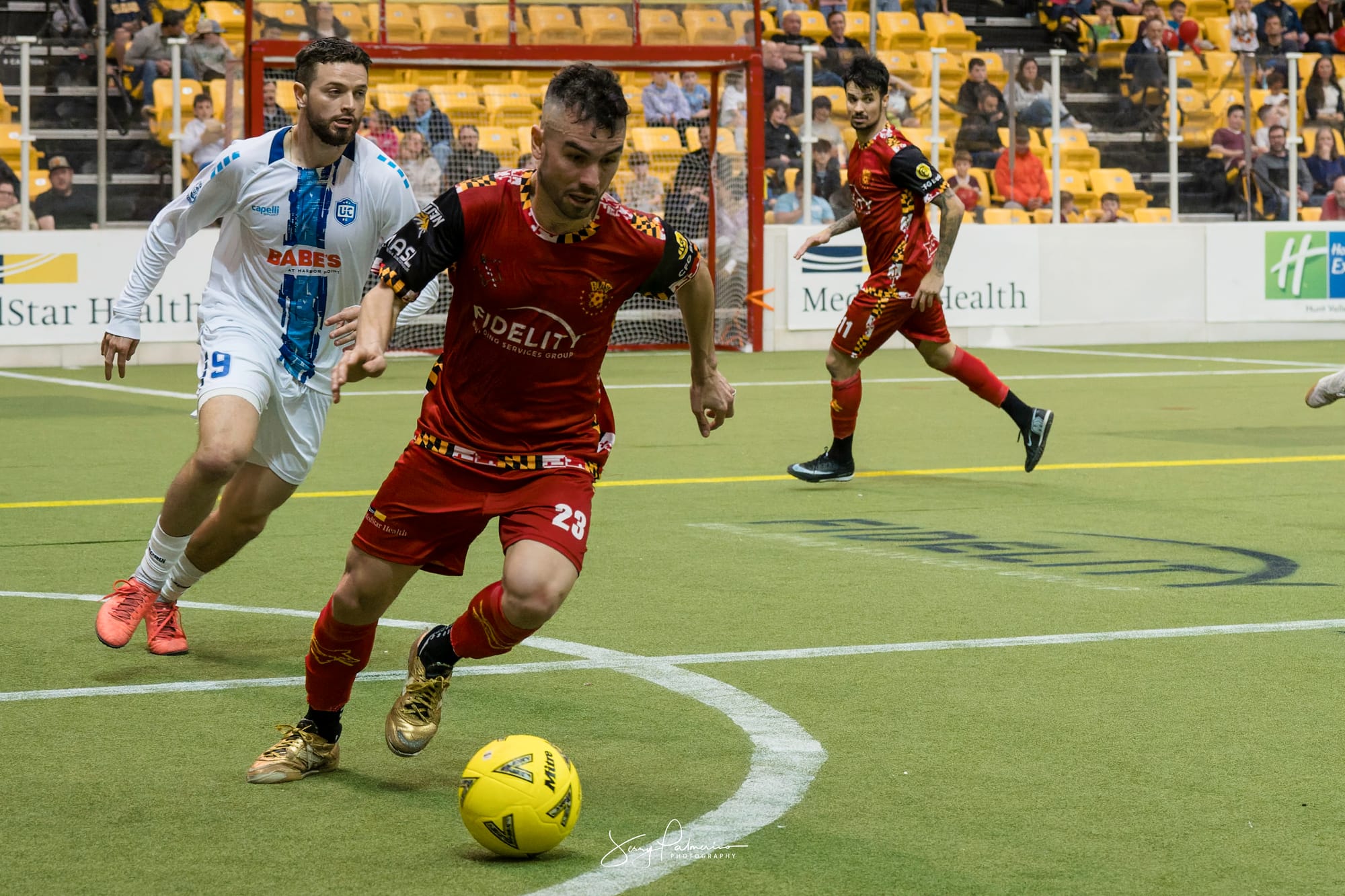
A PhotoSlammers style guide for wrestling, baseball, football, basketball, and every sport that refuses to slow down.
Fast action sports are pure chaos with a scoreboard. Bodies collide. Balls launch. Faces twist. Muscles fire. Everything happens faster than your brain wants to admit.
This guide breaks the whole thing down into pillars. Shutter speed. Anticipation. Positioning. Timing. Master these and you stop praying for the moment and start owning it.
Shutter Speed. The Foundation of Every Sharp Frame
If the sport moves fast, your shutter has to move faster. There is no cheat code.
Here is the baseline across the big ones.
Wrestling: 1/1250 or 1/1600.
Basketball: 1/1000 minimum. Go 1/1250 for drives and dunks.
Football: 1/2000 minimum. Faster for tackles and catches.
Baseball: 1/2000 minimum. Go 1/3200 if you want that bat on ball moment.
Soccer and lacrosse: 1/1250 minimum. 1/1600 for shots and collisions.
If you want to freeze sweat, fingertips, shoelaces, hair, and the exact shape of a face mid impact, fast shutter speed is the price of admission.
Your ISO will climb. That is normal. Grain is character. Blur is regret. Leverage the denoising capabilities of your favorite software.
Shoot in AF-C with a high frames per second. This depends on your camera, but a good place to be is around 10 fps for bursts. Some sports like baseball will require 30 fps if you want the exact moment the ball hits the bat.
Anticipation. The Secret Skill Pros Never Stop Practicing
Every sport has a rhythm. A pattern. A predictable kind of chaos. The best sports photographers are not reacting. They are predicting.
Here is what that looks like in real life.
Wrestling: Watch the hips. When the hips shift, the move is coming.
Baseball: Watch the pitcher. The batter is reacting. The pitch is the real trigger. Shoot with both eyes open when possible.
Football: Watch the quarterback’s eyes. They reveal the play before the ball even leaves his hand.
Basketball: Watch the ball handler’s shoulders. Shoulders tell the truth before the feet do.
Anticipation is not magic. It is repetition. The more you shoot a sport, the more you feel the moment before it happens.
Positioning. Where You Stand Decides What You Get
You can have perfect settings and still walk away empty if you stand in the wrong place. Positioning is the difference between a lucky shot and a reliable portfolio.
Wrestling: Sit low. Shoot across the mat, not down at it. Faces live in the horizontal plane.
Baseball: First base side for right handed hitters. Third base side for left handed hitters. You want the face, not the back of the helmet.
Football: End zone for touchdowns. Sideline for tackles. Move with the play, not against it.
Basketball: Baseline for drives. Corners for threes. Midcourt for storytelling moments.
Generally, shooting from a lower position makes athletes look more impressive. Always try to position yourself so that the face is in the photo; not the back of the athlete’s head. In sports with sidelines, this means you’ll need to move around, especially when the teams switch sides.
Your angle changes the emotion. Your distance changes the intensity. Your height changes the drama.
Timing. The Moment Inside the Moment
Every sport has micro moments. The instant before impact. The instant of impact. The instant after impact. Each one tells a different story.
Here is how you catch them.
Shoot bursts when the action peaks, not the entire play. Pay attention to reactions after the play.
Track your subject early so autofocus is already locked.
Press the shutter a hair earlier than your brain thinks you should.
Use high frame rate modes when the moment is unpredictable.
Use pre capture modes when your camera offers them. They save the frames before you even press the button.
Timing is not luck. Timing is preparation. The more you understand the sport, the more your finger becomes part of the action.
The Real Truth.
Fast action sports are not about being superhuman. They are about building habits that make missing the moment almost impossible.
Here is the system that never fails.
Shoot in manual mode. Use auto-ISO for sports, especially where lighting conditions change during the game. Some fields are lit better mid-field, but are dimly lit deep into the corners. Sometimes the stadium crew likes to turn the lights off and on to celebrate home runs. If you are fiddling with your controls, you may miss the shot.
Use a fast shutter speed.
Predict the play.
Stand where the story happens.
Anticipate. Press the shutter button early.
Shoot in controlled bursts.
Review only during breaks or you’ll miss something.
Trust your instincts.
Keep shooting.
You don’t always need a newer, better camera or lens. Rely on the gear you have now. Learn and earn your way to the next upgrade. You will know when you have outgrown your camera’s capabilities when you are frustrated by missing shots due to reasons unrelated to your skill. Be honest with yourself why you missed the shot.
Buying used in like-new or excellent condition is a good option. Keh.com and MPB.com are great options (Not sponsored). There’s always someone, who has to have the latest, unloading their “old” camera or lenses for that shiny, new, more expensive camera or lens. If you do buy new, wait a few months after the release. You may catch a small sale and/or avoid initial quality control issues that the manufacturer silently fixes in the next production run.
The bottom line: Sports reward the photographer who refuses to blink.