
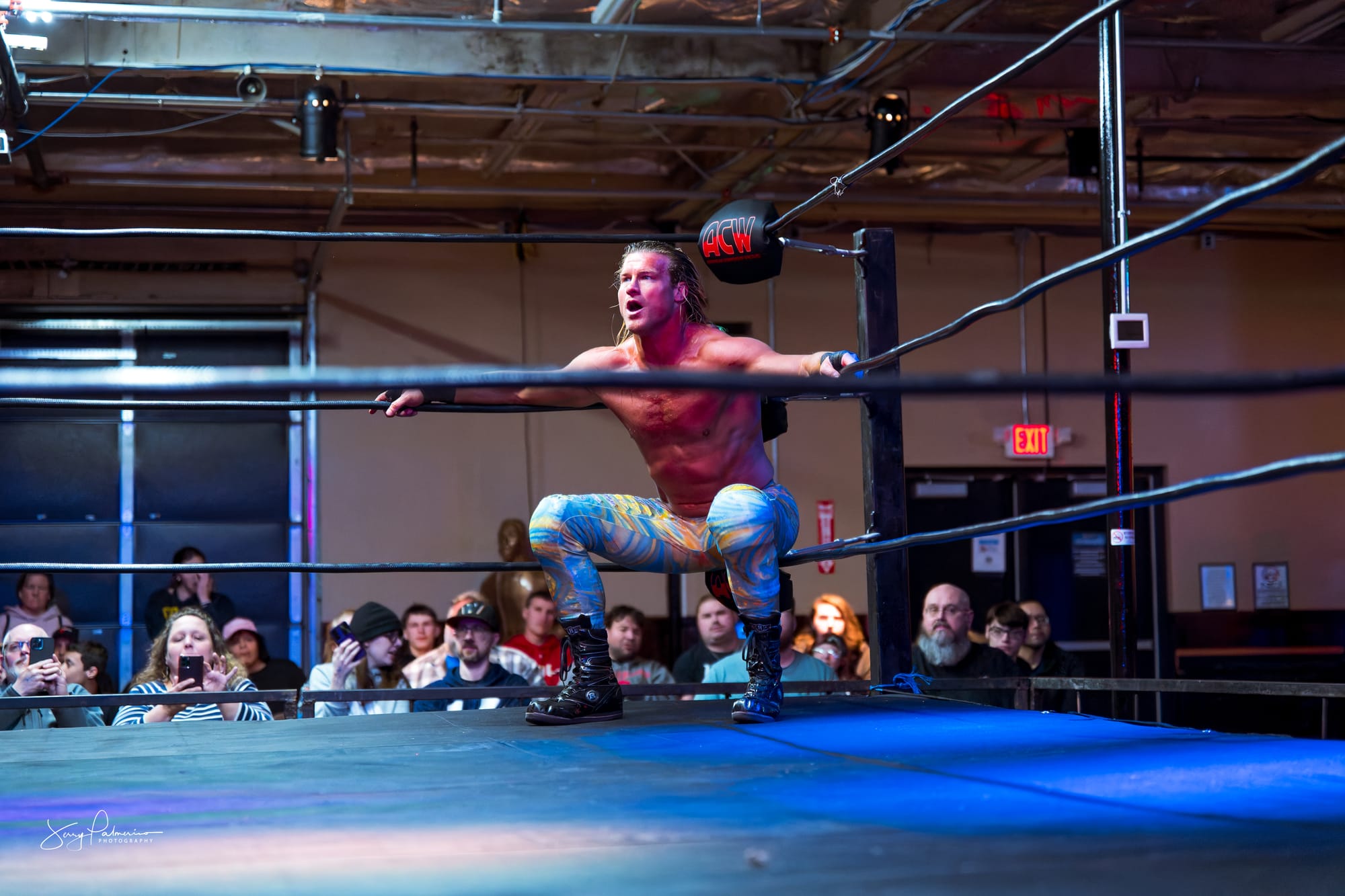

Low light photography is where your technique gets tested for real. It is the moment when your camera settings, your understanding of light, and your ability to adapt all have to work together. Whether you are freezing a wrestler mid scramble in a dim gym or shaping a dramatic portrait with a single light source, the fundamentals stay the same. You are managing noise, controlling motion, and making choices that keep your images sharp and intentional.
This guide breaks down the core principles that matter most in low light situations. It covers sports, portraits, constant LED lighting, and off camera flash or strobes. The goal is to give you a reliable approach that works in any dark environment.
The Three Core Controls in Low Light
Every low light decision comes back to three controls that work together.
Shutter speed controls motion. In sports you freeze action. In portraits you keep the subject sharp.
Aperture controls how much light enters the lens. Wider apertures like f1.8 or f2.8 help you gather more light.
ISO controls sensor sensitivity. Higher ISO adds noise but modern cameras handle it well when exposure is correct.
The key is knowing which control matters most for the moment you are shooting.
Low Light Sports Photography
Sports in low light is a technical challenge. You are dealing with fast motion, unpredictable timing, and lighting that was never designed for photography.
Shutter Speed Is Your First Priority
Indoor sports require fast shutter speeds to freeze motion.
Wrestling often needs 1/800 to 1/1250
Basketball or volleyball often needs 1/1000 to 1/1600
Dance or cheer under LED often needs 1/800 to 1/1280 to avoid flicker
If you go slower than these speeds, motion blur becomes unavoidable.
Aperture Wide Open Helps You Win the Light Battle
Use the widest aperture your lens allows. Settings like f1.8, f2, or f2.8 give you more light and help keep ISO under control.
ISO Is Not the Villain
Modern sensors handle ISO values like 12800 or 25600 extremely well when exposure is correct. Noise becomes a problem only when the image is underexposed. Proper exposure is the real solution.
LED Lighting Creates Its Own Challenges
LED lighting can cause banding, color shifts, and exposure inconsistencies. Use high frequency flicker reduction and test shutter speeds that sync with the LED cycle. Many shooters find stable results around 1/800, 1/1000, or 1/1250 depending on the venue.
Positioning and Anticipation Matter Even More in Low Light
When light is limited, you cannot rely on rapid fire shooting. You must anticipate the action and position yourself where the light is strongest. Corners of the mat, near the scorer table, or under brighter sections of the gym all help. Low light rewards shooters who think ahead.
Low Light Portrait Photography
Portraits in low light are a completely different experience. You are not reacting to action. You are shaping the scene with intention.
You Control the Light Source
In portraits you decide the direction of light, the intensity, the color temperature, and the softness. This gives you creative freedom even in dark environments.
Aperture and Depth of Field
Low light portraits often benefit from wide apertures like f1.4 or f1.8. This creates shallow depth of field, clean separation from the background, and maximum light gathering. Just be mindful of focus accuracy because depth of field can be extremely thin.
Shutter Speed for Portraits
You can shoot slower shutter speeds in portraits because the subject is not moving rapidly. Handheld minimum is often 1/125. With stabilization you can go to 1/60. On a tripod you can go as slow as needed.
Using Constant LED Lighting in Low Light
Constant LED lighting has become a favorite for both sports sidelines and portraits because it shows you exactly what the light looks like before you shoot.
Strengths of LED Lighting
What you see is what you get
Easy to shape with softboxes or grids
Great for video and hybrid shooters
No recycle time
Silent operation
Limitations of LED Lighting
Lower output than strobes
Possible flicker at certain shutter speeds
Color accuracy varies by brand
Best Uses for LED in Low Light
Environmental portraits
Backstage or behind the scenes
Dance or theater photography
Mixed ambient and artificial light scenes
LEDs are perfect when you want mood and control without the punch of a strobe.
Using Off Camera Flash or Strobes in Low Light
Flash is the ultimate equalizer in low light. It lets you overpower darkness and create your own lighting environment.
Why Flash Works So Well in Low Light
Flash freezes motion
Flash adds contrast and shape
Flash gives you clean ISO
Flash lets you control the entire scene
Key Flash Techniques
High speed sync for outdoor portraits
Feathering the light for softer transitions
Using grids to control spill
Balancing ambient and flash for natural looking results
Flash in Sports
Flash is rarely allowed in indoor sports, but when it is permitted you can use low power, bounce when possible, keep recycle times fast, and avoid distracting athletes. Most sports photographers rely on ambient light, but flash can be used in controlled environments like martial arts studios or staged athlete portraits.
Noise Reduction and Post Processing
Noise is part of low light photography, but it is manageable.
Shoot RAW instead of JPEG
Use modern noise reduction tools
Apply sharpening after noise reduction
Keep color noise under control
Noise is not the enemy. Underexposure is.
Final Takeaway
Low light photography is not about having the most expensive camera. It is about understanding how light behaves and how to control it. Once you master shutter speed, aperture, ISO, and artificial lighting, low light becomes a creative playground instead of a problem.