
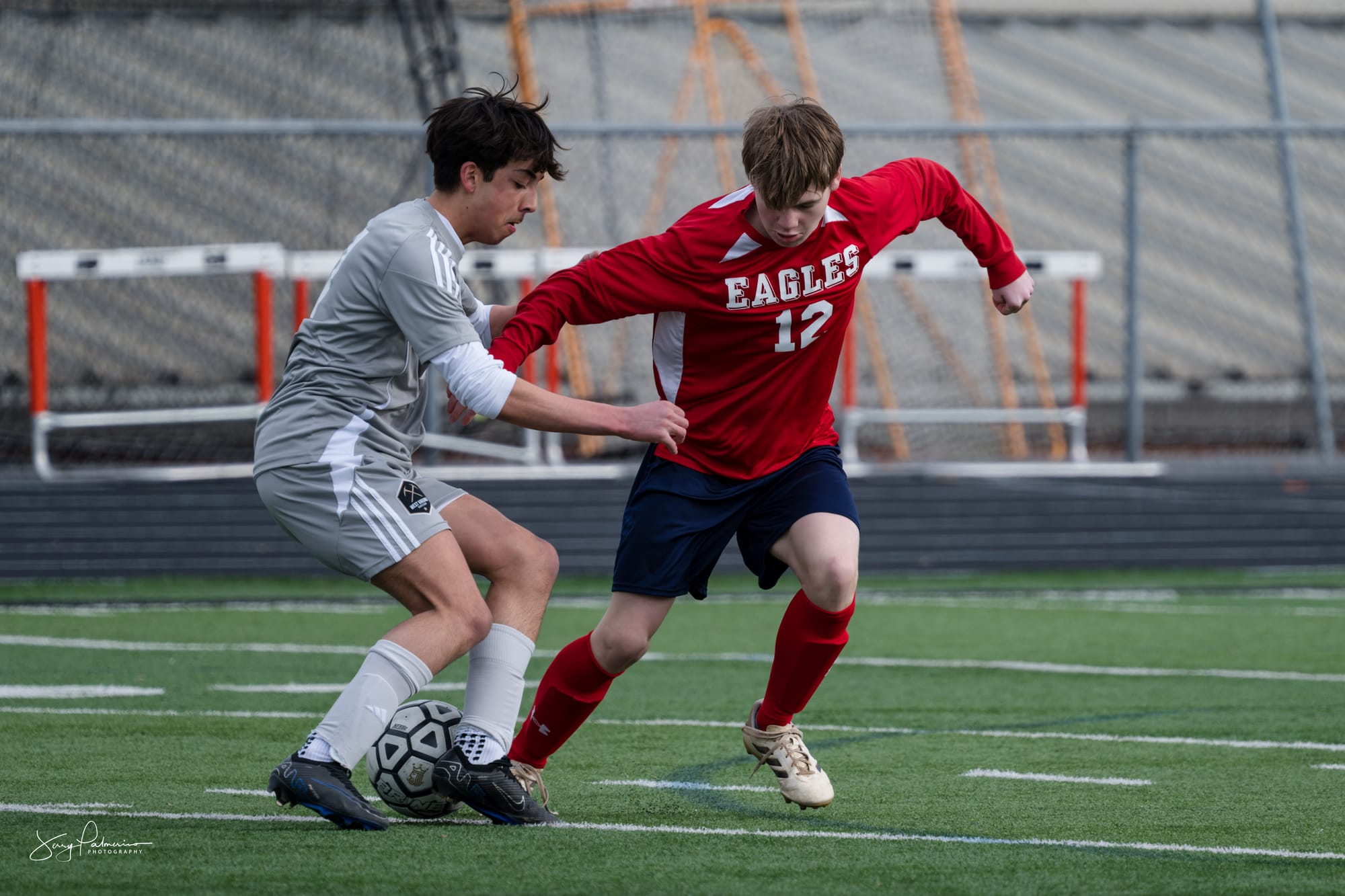
Outdoor soccer rewards photographers who understand rhythm, anticipation, and the physics of motion. The sport moves in long waves across the pitch, then explodes into sudden bursts of speed. Capturing it well requires a blend of technical precision, field awareness, and a storyteller’s eye.
The Foundation: Know the Game Before You Photograph It
A photographer who understands soccer will always outperform one who simply reacts to it. The game has patterns. It has predictable lanes of attack. It has moments that repeat across every level of play.
- Midfield transitions create the cleanest running shots
- Wing attacks produce crosses, headers, and diving saves
- Set pieces generate the highest concentration of dramatic frames
- Counterattacks reward photographers who stay alert even when the ball is far away
Understanding these patterns lets you position yourself with purpose instead of chasing the ball.
Light and Timing: The Two Variables You Cannot Control
Outdoor soccer is a masterclass in adapting to changing conditions. Noon sun, golden hour, cloud cover, and stadium shadows all shape the look of your images.
Bright Sun
- Use 1/2000 or faster to freeze sprints and tackles
- Keep ISO low for maximum detail
- Watch for harsh shadows on faces and adjust your angle
Cloudy Conditions
- Clouds act as a natural softbox
- Colors become richer
- You can shoot from almost any angle without losing facial detail
Golden Hour
- The most cinematic time to shoot
- Backlit players create glowing edges around hair and jerseys
- Perfect for storytelling frames and emotional moments
Positioning: The Secret Weapon of Soccer Photography
The field is enormous. Your position determines your story.
Endline Position
Best for:
- Goals
- Keeper dives
- Sliding tackles
- Celebrations running toward the camera
Sideline Position
Best for:
- Midfield battles
- Coaches and bench reactions
- Long passing sequences
- Clean running shots
Corner Position
Best for:
- Aerial duels
- Set pieces
- Crowded box action
Every position has strengths. The key is to move with intention, not impulse.
Camera Technique: Precision in Motion
Soccer is fast. Your technique must be faster.
- Use continuous autofocus with a subject tracking mode
- Shoot at 1/2000 or faster for crisp action
- Keep aperture around f2.8 to f4 for subject separation
- Use burst mode intelligently to avoid filling your buffer
- Track the play early so your autofocus is already locked
The goal is not to spray and pray. The goal is to predict and capture.
Storytelling: The Frames That Matter Most
A complete soccer gallery is more than action. It is emotion, context, and narrative.
- Pre game rituals
- Coach intensity
- Team huddles
- Crowd reactions
- Post goal celebrations
These frames connect viewers to the human side of the sport.
The Rule: Soccer Photography Is About Anticipation
The best soccer photographers do not chase the ball. They read the play. They understand momentum. They know when a winger is about to cut inside or when a striker is about to make a near post run.
Anticipation is the difference between capturing the moment and missing it by a fraction of a second.