Monster truck shows are one of the toughest assignments a motorsports photographer can take on. The action is loud, dusty, unpredictable, and over in a fraction of a second — a 10,000-pound truck can go from a standing start to a full backflip before you've finished your first exposure. Getting the shot means preparing your gear, your position, and your eye long before the engines fire.
Know the Format Before You Shoot
Every event has a rhythm: freestyle runs, racing heats, car-crush passes, and often a donut or wheelie contest. Freestyle is where the most dramatic images live — full air, roof-crush landings, and smoke-filled burnouts — but it's also the least predictable. Racing gives you tighter, more repeatable compositions since trucks follow the same line lap after lap. If you can, watch a practice session or the first heat before shooting seriously. It tells you where trucks tend to launch, land, and stall out, which saves you from guessing during the runs that matter.
Gear That Actually Holds Up
Fast telephoto zoom (70-200mm f/2.8 or similar): covers most action without needing a lens change mid-event.
Wide-angle (16-35mm): essential for low-angle shots when a truck launches directly toward you.
Weather sealing or a rain cover: dirt, mud, and diesel exhaust get into everything.
Extra batteries and cards: cold arenas and continuous burst shooting drain both fast.
Ear protection: monster truck engines regularly exceed 130 decibels — protect your hearing, not just your gear.
Camera Settings for Freezing (or Embracing) Motion
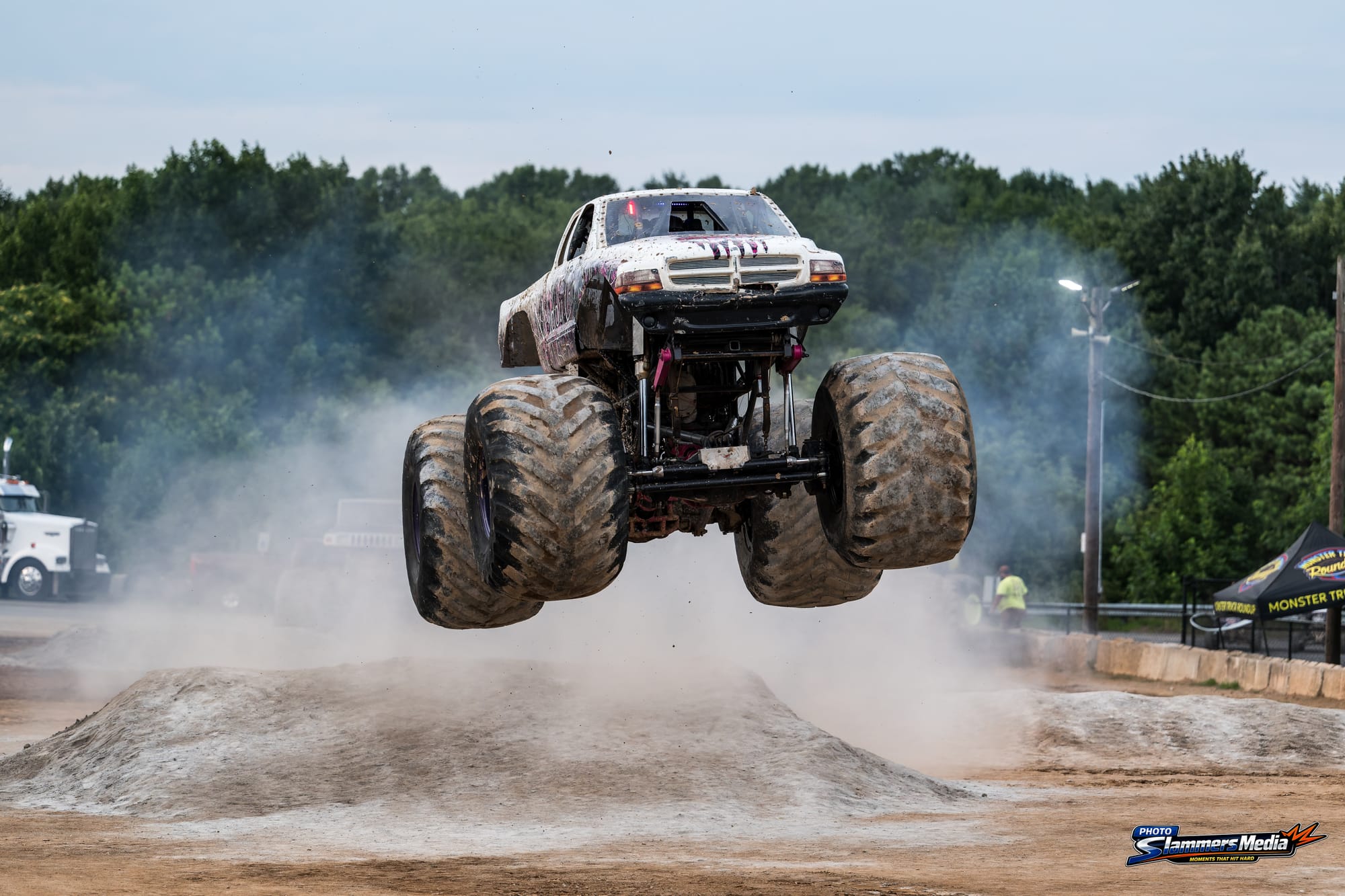
A shutter speed of 1/1000s or faster will freeze a truck mid-air, tires and suspension sharp. Drop to 1/250s–1/500s if you want a touch of wheel blur to communicate speed without a fully frozen, static look. Use continuous autofocus (AI Servo or AF-C) with a wide-area or zone focus mode — trucks move erratically enough that single-point tracking often loses them. Burst shooting at your camera's highest frame rate matters more here than almost any other motorsport, since the peak moment of an air or landing lasts a single frame.
Positioning and Safety
Event staff will usually designate photographer pits or shooting lanes — use them. Monster trucks throw dirt, debris, and occasionally parts at high velocity, and safety barriers exist for real reasons.
The best angles usually come from:
Corner and jump zones, where trucks are airborne or leaning hard into a turn
Low, ground-level angles, which exaggerate the size and height of the truck
Slightly elevated positions, useful for capturing full-arena freestyle context and crowd reaction
Always know your exit path. Monster truck events are one of the few shooting environments where a vehicle can leave the intended course entirely.
Composition Tips
Shoot at the peak of the jump, not the takeoff — that's when the truck reads as most dramatic against the sky.
Include dirt spray, smoke, or crowd elements in the frame for scale and atmosphere.
Don't ignore the pit and staging areas — driver preparation, crew reactions, and truck details add variety to an event gallery beyond pure action shots.
Vary your angles across the show; a gallery of identical telephoto jump shots gets repetitive fast.
Post-Processing Notes
Dust and stadium lighting can shift color balance and reduce contrast. Correct white balance first, then bring back contrast and shadow detail before pushing saturation — over-saturating dirt and smoke tends to look artificial rather than dramatic. Crop tightly to reinforce the size and power of the trucks, but preserve enough space for print and web crop ratios your client or outlet will need.
Final Thought
Monster truck photography rewards preparation over reaction time. By the time a truck is airborne, there's no adjusting settings or recomposing — your gear, position, and eye need to already be set for the shot you want. Study the format, protect your ears and your gear, and treat every heat as a chance to capture the one frame where a ten-ton truck looks like it's flying.