
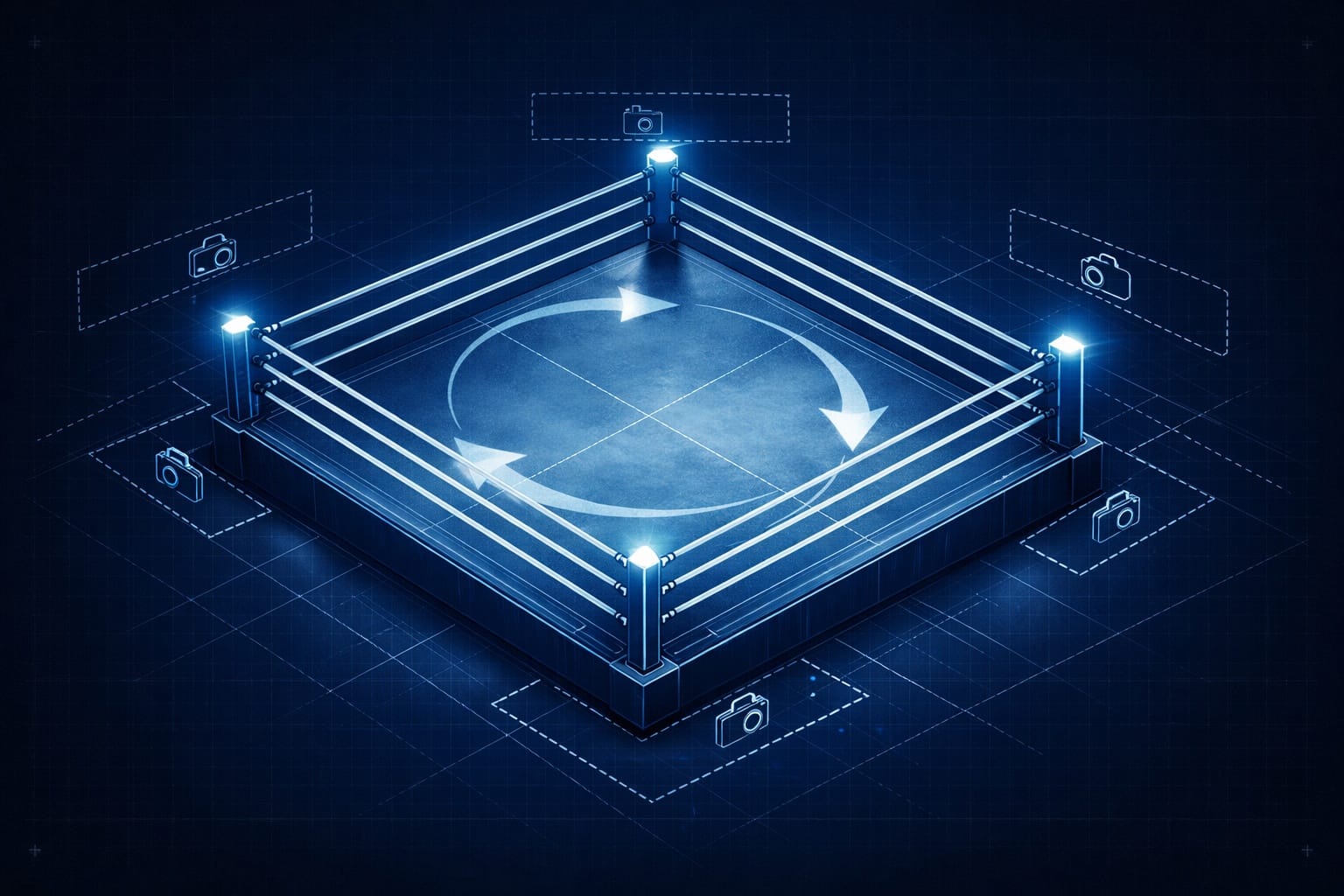
How to Position Yourself, Frame the Action, and Use the Left Side Rule to Capture Independent Wrestling at Its Best
Independent wrestling is one of the most demanding environments a photographer can work in. The ring is close. The lighting is unpredictable. The crowd is practically touching the apron. Wrestlers move with a freedom that does not exist in tightly controlled televised productions. Yet beneath all of that chaos is a structure that every American trained wrestler follows. A structure that lets you anticipate movement before it happens and position yourself for the strongest possible shot.
That structure is the left side rule.
Once you understand it, your entire approach to ringside photography changes. You stop reacting and start predicting. You stop chasing the action and start meeting it. This guide breaks down the fundamentals of indie ringside photography and shows how the left side rule becomes your most reliable tool in buildings where nothing else is predictable.
Why the Left Side Rule Matters for Ringside Photographers
American pro wrestling is built on a simple foundation. Wrestlers apply holds and control positions on the opponent’s left arm. This creates predictable rotation patterns and predictable storytelling patterns. When a wrestler grabs a headlock on the left side, their chest opens toward the audience. When they isolate the left arm, the opponent’s face turns toward the crowd. When they break a tie up, the rotation moves left.
For a photographer, this becomes a roadmap.
- Left side holds open the story toward you
- Left arm control predicts the direction of the next bump
- Left side tie ups tell you which corner to watch
- Left side communication keeps the working hand away from the audience
Once you understand this, you can read the match like a sequence of rotations. You know where the bodies will turn. You know where the faces will open. You know where the next moment will land.
Where to Stand at Indie Shows
Independent wrestling gives you freedom that larger televised promotions do not. You can move. You can shift corners. You can slide along the apron. But movement without purpose creates missed shots. The left side rule helps you choose the right position before the match even begins.
The Four Primary Ringside Positions
- Near left corner
- Near right corner
- Hard cam corner
- Entrance corner
The Best Default Position
The near left corner on the audience facing side is the strongest starting point for most indie matches. This angle gives you the cleanest view of the story because most movements rotate left. From this position you capture faces, reactions, and impact without fighting the ropes or the referee.
When to Move
Move only when the match tells you to move.
- A dive is loading
- A corner sequence is building
- A top rope spot is coming
- A lucha influenced wrestler is about to break right
Indie ringside photography is not about running around the ring. It is about reading the next rotation and being there before it happens.
How to Frame Indie Wrestling Shots
Independent rings are tight. Fans are close. Lighting is inconsistent. You need to create clarity inside chaos.
Core Framing Principles
- Shoot low to make wrestlers look larger
- Avoid ropes in faces by shifting a few inches left or right
- Use diagonals to create motion
- Capture reactions because emotion tells the story
- Shoot through gaps between ropes and turnbuckles
Using the Left Side Rule to Frame
When a wrestler applies a left side hold
- Their chest opens toward the audience
- Their face turns toward the crowd
- Their opponent’s face turns toward you
This is the moment to shoot
- Emotion
- Struggle
- Storytelling
When the hold transitions
- The rotation continues left
- The next move breaks left
- The next bump lands left
You can frame the next shot before the move even happens.
How Lucha and Hybrid Wrestlers Change Your Angles
Many independent promotions feature lucha influenced talent. These wrestlers often work the right side. This flips the entire rotation pattern.
What This Means for You
- Right side arm drags break the opposite direction
- Right side holds rotate counter to the American pattern
- Rope runs may reverse
- Corner sequences may flip sides
How to Adjust
- Shift to the near right corner
- Expect faster rotation
- Expect more aerial movement
- Expect less predictable pacing
Lucha wrestlers reward photographers who stay light on their feet and read body language instead of relying on the American pattern.
Independent Ringside Shooting vs Major Televised Promotions
Televised promotions are built for the camera. Independent wrestling is built for the live crowd. This creates two very different photographic environments.
Major Televised Promotions
- You cannot move
- You shoot from the audience facing side
- Wrestlers open toward the primary camera
- The left side rule is reinforced for clarity
- Spots are timed for production
This gives you
- Clean faces
- Predictable rotation
- Consistent lighting
- Fewer rope obstructions
Independent Wrestling
- You can move
- You can choose your angles
- You can shoot from corners
- You can shoot from the floor
- You can shoot behind the ring
Independent wrestling gives you creative freedom. Televised promotions give you predictable structure. Both require understanding the left side rule. Independent wrestling requires anticipation. Televised promotions require discipline.
Bringing It All Together
Independent wrestling rewards photographers who understand movement, timing, and story. The left side rule is the foundation that makes all of that readable. It gives you a way to predict rotation. It gives you a way to anticipate reactions. It gives you a way to position yourself before the moment arrives. When you combine that knowledge with smart positioning, intentional framing, and an understanding of how different styles influence movement, you stop taking pictures of wrestling and start documenting the story inside the match.
Every building is different. Every ring is different. Every crowd is different. But the fundamentals remain the same. Stand where the story opens. Frame with purpose. Read the next rotation. Capture the emotion before the move. Independent wrestling is unpredictable, but your approach does not have to be. With the left side rule as your guide, you can walk into any venue and create images that feel powerful, intentional, and alive.